How Printable Terrain Designers Should Build Calibration Pieces Into a System
A terrain calibration piece should reproduce the system’s real interfaces, isolate likely failures and give users a fast pass-or-adjust decision before a large print run.

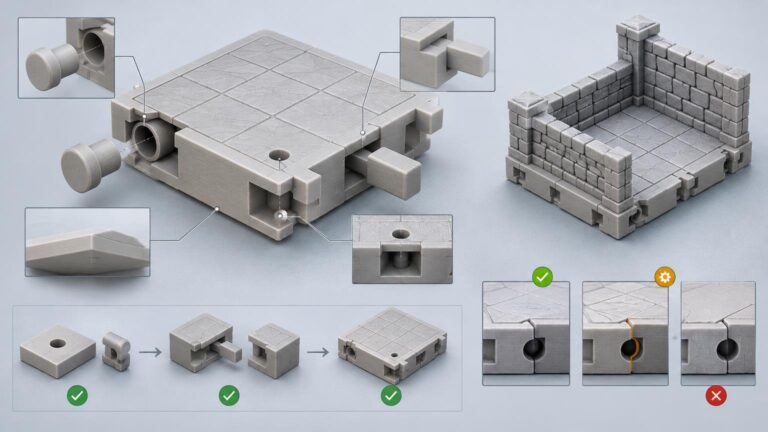
A terrain calibration piece should reproduce the system’s real interfaces, isolate likely failures and give users a fast pass-or-adjust decision before a large print run.
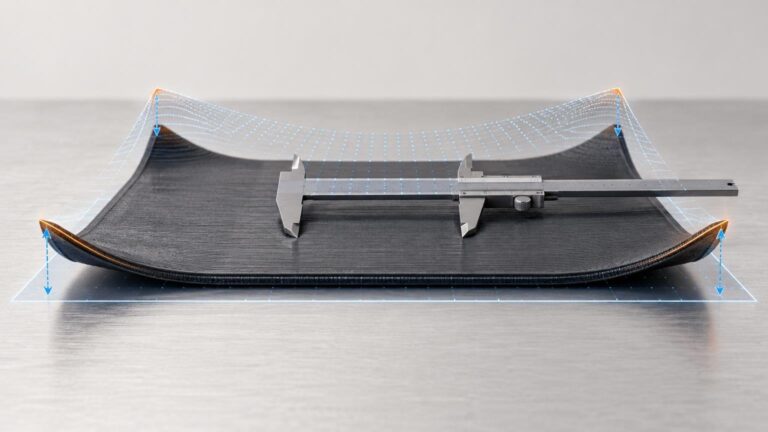
A correct measurement in the middle does not prove the whole FDM part is dimensionally accurate. Map the deformation first, then correct adhesion, cooling, material, or machine errors separately.

A slip fit allows movement or removal; a press fit holds parts together through interference. For FDM parts, the correct dimensions must be proven under final print conditions.
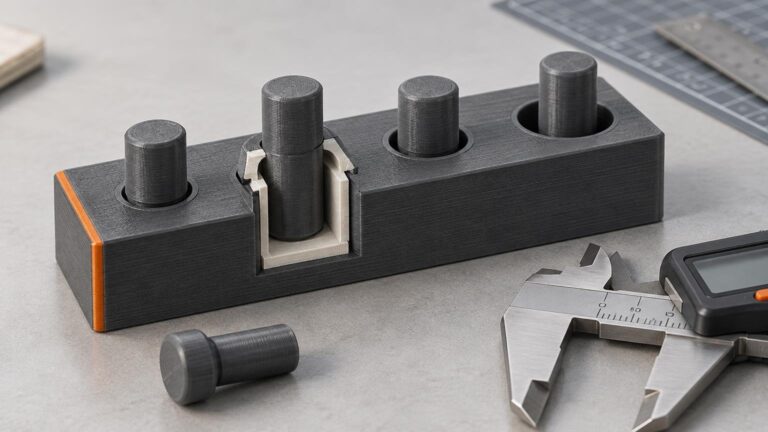
A useful fit-test part reproduces the real joint, varies one clearance at a time, and is printed under the same conditions as the final component.
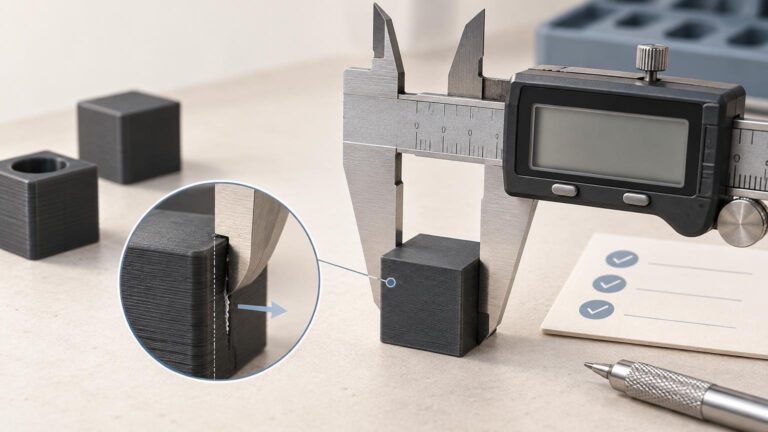
A practical method for measuring cooled FDM parts, documenting repeated readings and separating real dimensional error from local print defects.
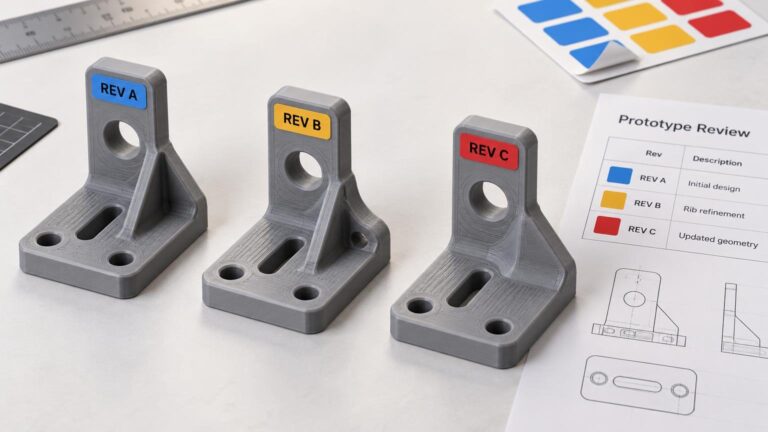
Build a traceable labeling system for client prototypes, choose between individual stickers and sticker sheets, and keep labels away from functional surfaces.
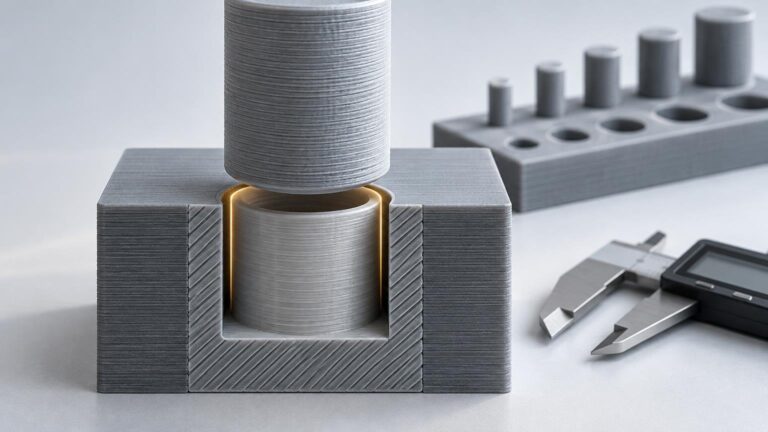
There is no universal peg-and-socket clearance for FDM parts. Define the gap correctly, print a calibration coupon under final conditions, and verify the fit.
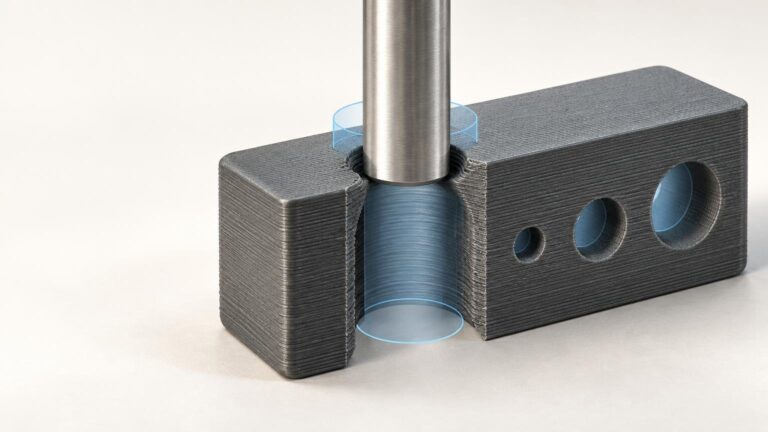
Undersized FDM holes do not have one universal fix. Diagnose where and how the bore is tight, correct the underlying problem, and validate the intended fit.
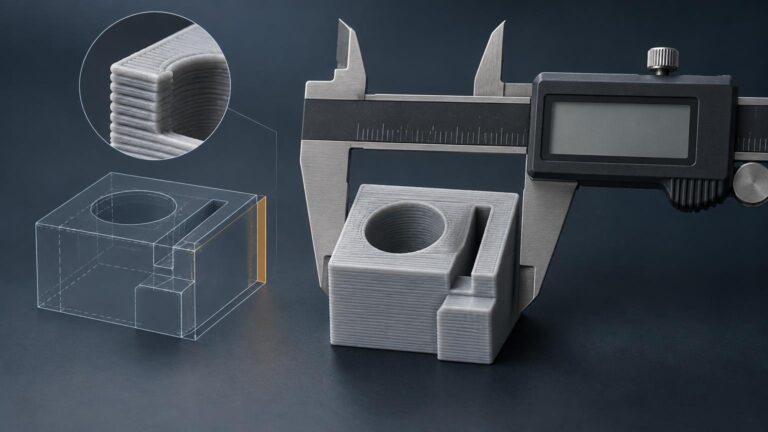
A practical workflow for measuring FDM dimensional error, identifying its cause, applying targeted corrections, and validating the actual functional fit.